
Heavy black outlines
A defining part of traditional that is balanced against scale, anatomy and long-term readability.
Tattooed by Joshua · Melbourne
American Traditional tattooing uses bold outlines, simplified shapes and compact colour fields to create designs that read instantly and age strongly.
What makes this style unique
A defining part of traditional that is balanced against scale, anatomy and long-term readability.
A defining part of traditional that is balanced against scale, anatomy and long-term readability.
A defining part of traditional that is balanced against scale, anatomy and long-term readability.
A defining part of traditional that is balanced against scale, anatomy and long-term readability.
A defining part of traditional that is balanced against scale, anatomy and long-term readability.
A defining part of traditional that is balanced against scale, anatomy and long-term readability.
History and evolution
The style developed through early twentieth-century Western tattoo shops and maritime culture. Artists such as Norman Collins helped codify its direct drawing language, limited palette and durable construction.
Subjects and concepts
Why clients choose it
Longevity
Bold outlines and generous negative space are among the most durable tattoo structures. Small gaps still need enough room to resist merging over decades.
Artist-led planning
Joshua evaluates traditional concepts by silhouette, placement and whether the drawing benefits from his current black and grey practice. The page is educational because a dedicated traditional portfolio is not yet published on this site.
Best body placements
Forearms, upper arms and calves suit individual flash pieces; chest and back panels allow larger compositions; hands can work only when line weight and spacing are simplified.
Planning your tattoo
The process begins with references, placement photos and approximate size. Composition, sessions, healing and future extensions are considered before the final direction is confirmed.
Read the preparation guide →Relevant portfolio context
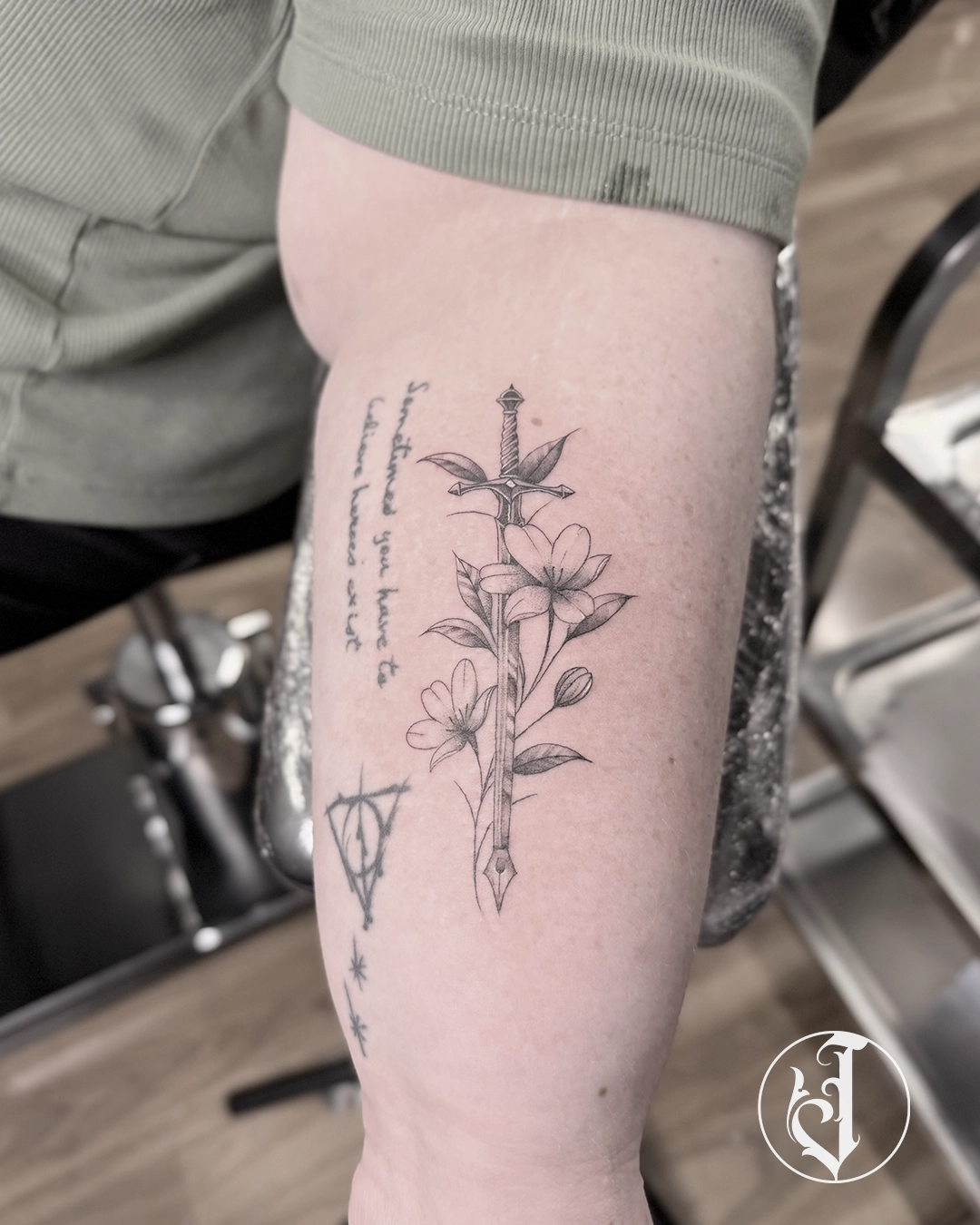
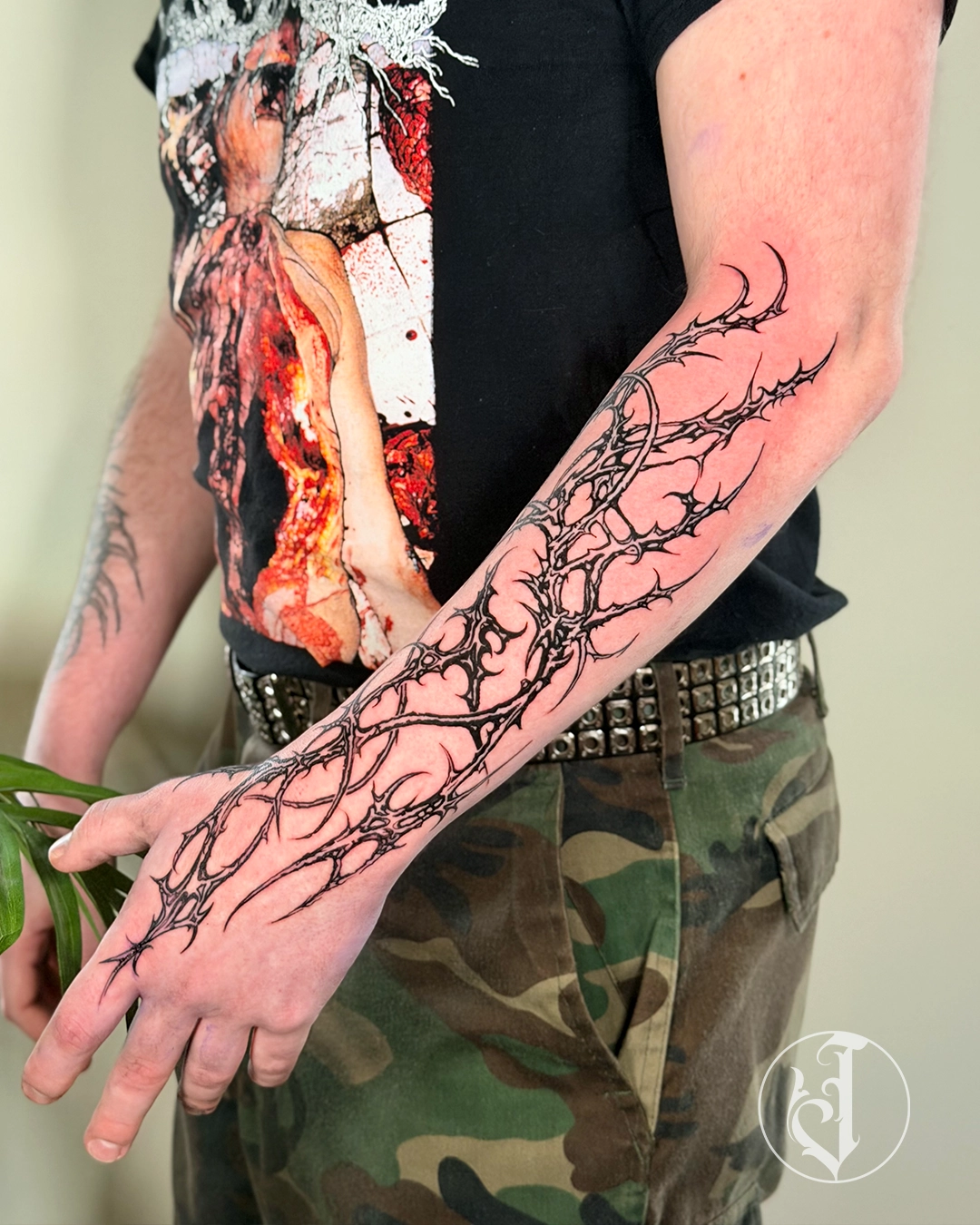
The images below demonstrate adjacent techniques in Joshua’s genuine portfolio. They are not presented as examples of a dedicated Traditional portfolio.

Frequently asked questions
Short, practical answers about planning, pain, healing, cost and long-term readability.
American Traditional tattooing uses bold outlines, simplified shapes and compact colour fields to create designs that read instantly and age strongly.
The style developed through early twentieth-century Western tattoo shops and maritime culture. Artists such as Norman Collins helped codify its direct drawing language, limited palette and durable construction.
The key traits are heavy black outlines, compact silhouettes, limited colour palette, minimal tonal modelling. A successful design uses those traits as one clear composition rather than a checklist of effects.
Joshua evaluates traditional concepts by silhouette, placement and whether the drawing benefits from his current black and grey practice. The page is educational because a dedicated traditional portfolio is not yet published on this site.
Common directions include eagles, panthers, anchors, daggers, swallows, ships. The final artwork should be redrawn around the individual story and body rather than copied from another tattoo.
Forearms, upper arms and calves suit individual flash pieces; chest and back panels allow larger compositions; hands can work only when line weight and spacing are simplified.
Only when the essential shapes and spaces remain clear. If the requested detail will not age cleanly, Joshua will recommend simplification or a larger size. In Traditional, heavy black outlines and compact silhouettes must both remain visible at that scale.
Yes, when the design language connects around the limb and moves across joints. A sleeve needs focal areas, transitions and quieter negative space rather than unrelated images forced together. For Traditional, Joshua maps heavy black outlines around the limb before individual subjects are finalised.
Pain depends more on placement and duration than style. Ribs, sternum, knees, elbows, hands and feet are usually more intense than outer arms or thighs. With Traditional, the passes needed to build heavy black outlines can also affect tenderness.
Healing follows the usual stages of tenderness, light flaking and gradual return of normal texture. Dense black, heavy colour or long sessions may feel more tender, so follow the supplied aftercare. For Traditional, early healing must protect compact silhouettes from friction, soaking and unnecessary handling.
Bold outlines and generous negative space are among the most durable tattoo structures. Small gaps still need enough room to resist merging over decades.
Many concepts can be translated into black and grey when silhouette, texture and contrast still support the style. Palette should be chosen during planning, not removed at the end. For Traditional, Joshua checks whether heavy black outlines still reads clearly without the original palette.
Pricing depends on size, placement, detail, preparation and session count. Send clear references and an approximate measurement for an informed estimate after review. In Traditional, the time required to build limited colour palette is an important part of the estimate.
Small focused pieces may take one appointment; sleeves, backs and layered work require several. The plan accounts for linework, shading, healing and safe daily limits. For Traditional, forearms, upper arms and calves suit individual flash pieces can also change the safest session structure.
Send subject, mood, composition and details you like, plus a clear placement photo. References guide a new design and should not request an exact copy of another artist’s tattoo. For Traditional, references that clearly show heavy black outlines are especially useful.
Accepted projects are adjusted for the body, scale and personal brief. Customisation covers silhouette, focal point, negative space and future connections. A Traditional design is rebuilt around compact silhouettes and the chosen anatomy.
Possibly, but the existing tattoo controls design freedom. Dark areas, scar tissue, size and laser fading must be assessed from clear photos first. In Traditional, heavy black outlines may help or limit cover-up options depending on the old ink.
The style can be adapted through value range, line weight, colour and negative space. Healed contrast is planned for the individual skin, not a bright screen mock-up. For Traditional, heavy black outlines is adjusted so the healed result stays readable.
Eat properly, hydrate, sleep well and avoid alcohol before the session. Wear clean loose clothing that exposes the placement and do not shave unless instructed. For Traditional, clothing should also give clear access to the lines and movement of the placement.
Use the booking form with the idea, placement, size and references. Joshua will confirm fit, consultation needs, deposit and available dates. For Traditional, mention whether eagles or panthers is the main direction.
Continue exploring
Custom tattoo enquiries
Send clear references, placement, size and the meaning behind the project. Joshua will confirm whether it suits his current practice and explain the next step.